

Residents are still voicing concerns and asking questions about Orange County’s technology zoning district months after it was approved.
In December, supervisors approved a new technology zoning district to accommodate high-intensity technology-based uses including data centers, technology schools or colleges and technology research and development facilities. Four uses are allowed by special use permit (SUP)–on-site power generation, a public utility facility not including utility-scale solar, a telecommunications tower and a data center. The district could be applied to any suitable property through a rezoning and sets forth larger setbacks and buffers as well as height restrictions and sign regulations. The use of public water, groundwater or potable water is prohibited.
Additional items added by the planning commission in response to public feedback were removed by supervisors including the requirement of quarterly utility usage reports and a 1,000 feet setback from an occupied residence.
During last week’s planning commission meeting, residents again questioned the zone, which has been dubbed as “floating.” Michael Regan said the floating zone functions as a “roadmap” for data center development. He said it encourages land speculation since it can be obtained on any suitable piece of property via a rezoning. He questioned if the ongoing work to strengthen the county’s comprehensive plan to fight against the 765kV Valley Link transmission project will be moot due to the floating zone.
“I would not be surprised if the response [at the SCC] is simply that your own land use ordinance allows this demand to occur throughout the county [and] we have to plan the electrical system needed to serve it,” Regan said. “We need to call this what it has become. It’s no longer simply a floating technology zone. Given today’s electrical reality it has become a floating transmission ordinance because wherever a data center is allowed to float the transmission needed to serve it will follow.”
He asked the commission to restore the original safeguards that were removed from the ordinance and set clear, objective criteria for when a data center application should be denied. Regan’s wife, Sarah, previously announced that she had obtained emails from county staff via a Freedom of Information Act request that showed the safeguards were removed at the suggestion of data center developers. Two specific provisions–the 1,000 feet setback from an occupied residence and the utility usage reports–were among the emails and were said to be too restrictive and trade secrets, respectively, by one of the data center attorneys. Those same provisions were removed from the final ordinance moments before being approved.
During last week’s meeting Sarah Regan again encouraged commissioners to set clear guiding principles that protect Orange County’s rural character where data centers are involved. She said if the county doesn’t agree that hyperscale data centers don’t belong in the county, residents are owed a conversation about where they do belong.
“If major transmission facilities deserve adequate planning restrictions, data centers do, too,” Regan said.
Commission chair and District 5 commissioner Frank DiPasquale said as far as he knows there are no data center applications that have been filed in the county. He also said in speaking to the members of both the board of supervisors and planning commission who were serving when the technology district was developed, all feel comfortable with what was approved.
“We feel comfortable and confident that what we did was really good work,” he said.
He noted that “any application for a data center would be met with strong headwinds,” something that is reflected in the technology zoning district ordinance.
District 3 commissioner Jordan Marshall reminded those in attendance that before the ordinance was developed, data centers were allowed by-right in industrial zoned areas.
“I understand and see the concern with a floating district and technology district as a whole, but it is leaps and bounds beyond what we had before,” he said. “This was the strengthening of an ordinance, not weakening.”
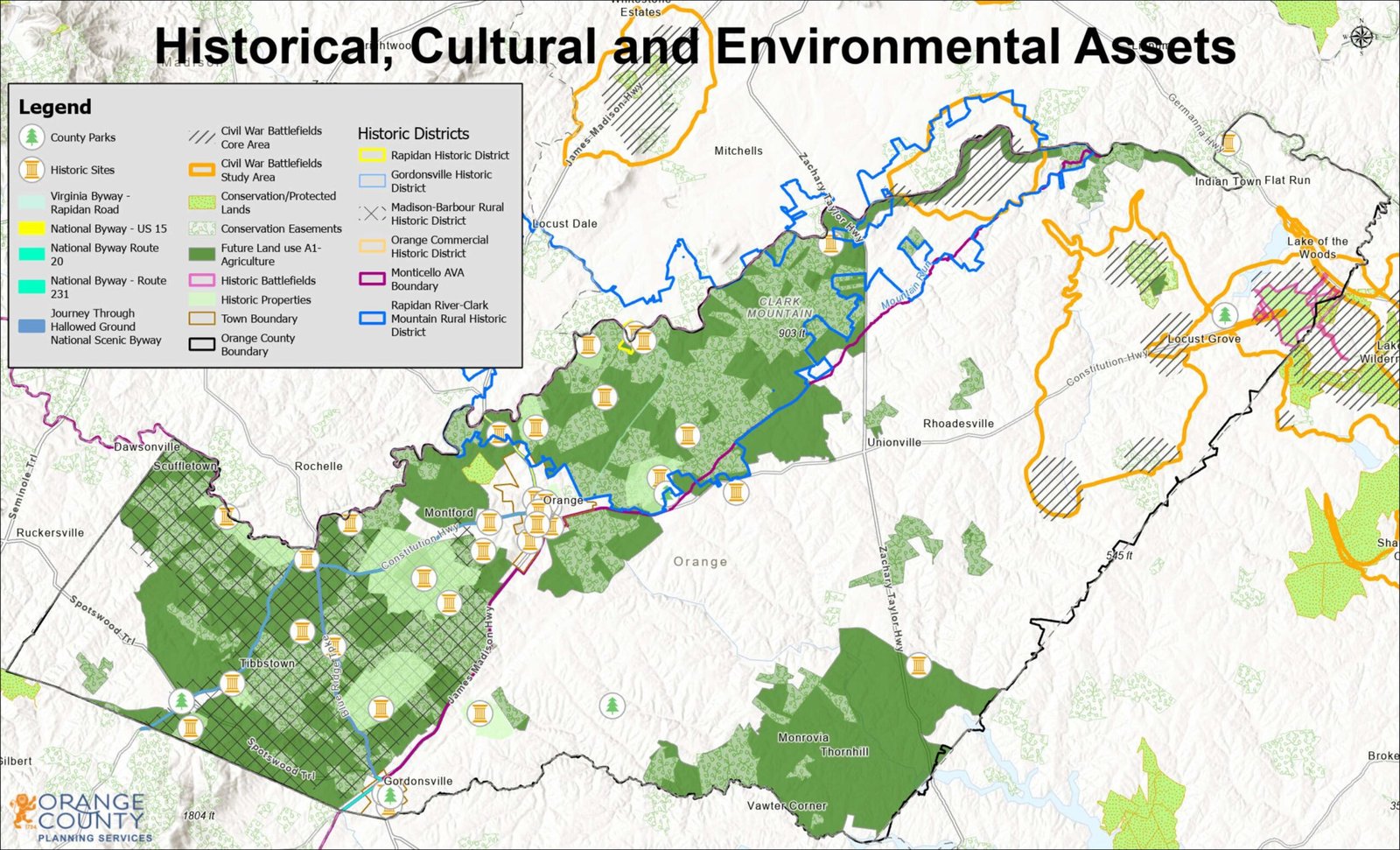
Later that same meeting, the commission recommended approval of changes to the comprehensive plan to strengthen it against the Valley Link transmission project. The changes added additional statutory language, expressed that lines should be placed among existing right-of-way and placed underground and created a map highlighting the county’s historic, natural and agricultural resources.
The recommended changes will now be sent to a board hosted public hearing for final approval.

