

The Town of Orange currently allows data centers by-right in several zones, something that may soon change.
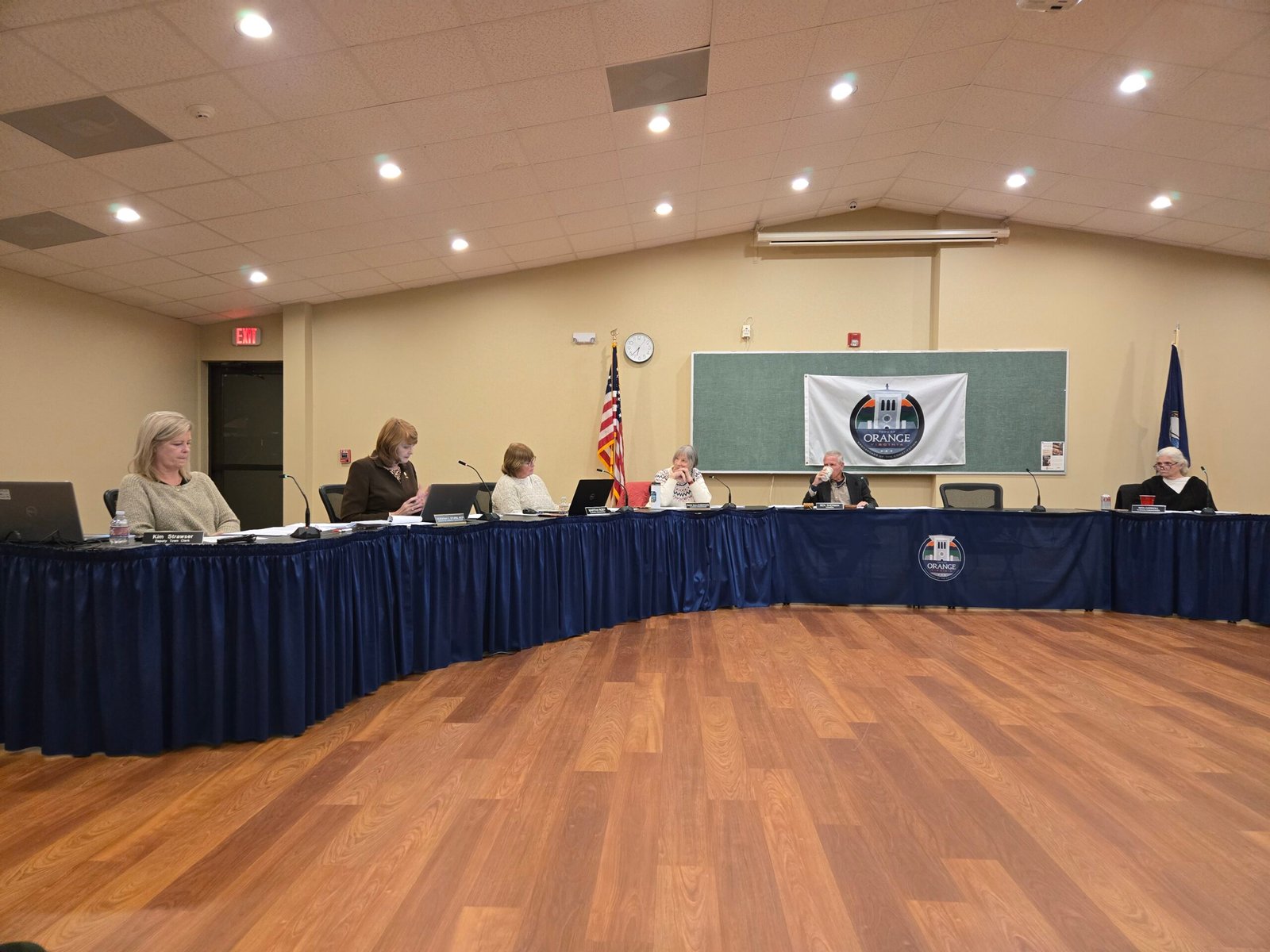
On Tuesday, the Orange Planning Commission held a public hearing to amend the zoning ordinance to remove data centers as a by-right use in the traditional town center (TTC) zoning district and change them from by-right to requiring a special use permit in the town activity center (TAC), rural commercial (RC) and traditional industrial zoning districts (TI). Data centers are not permitted in the rural residential (RR), traditional residential low density (TR-L) and traditional residential high density (TR-H) districts.
The change is part of ongoing zoning ordinance revision discussions that will continue into the future. However, town staff said the proposed amendments dealing with data centers are “pertinent given recent inquiries that have brought to light ordinance provisions that are outdated, lacking or potentially inconsistent with desired land use policies.”
Also part of the public hearing were two definition changes–data centers and schools. The current data center definition is said to be “inconsistent with current data center function and purpose” and would be replaced by “A use involving a building/premise in which the majority of the use is occupied by computers and/or telecommunications and related equipment, including supporting equipment and other associated components related to digital data operations where information is processed, transferred and/or stored.”
As for schools, this change is not related to data centers and was instead spurred by a recent inquiry regarding opening a cooking school in town. The amended school definition would have two additional sections added including “unlicensed instruction for children and adults in a group setting in the arts, vocational and hobby activities and academic tutoring” and “post-secondary curriculum and instruction.”
Prior to the start of the public hearing, town manager Chris Snider spoke about the recent “rampant speculation” surrounding data centers in the town. Some have said that a data center is imminent, with plans to annex a portion of county land near Mayhurst for the use. Snider didn’t mention specifics, but did say that the town is in need of increased revenue. He said several large businesses, including American Woodmark, have left the town, accounting for a loss of approximately 1,500 jobs that were supporting working families. He said 15% of the town is at or below the poverty line with vacant store fronts on Main Street and vacant industrial sites. He said the water plant will need significant upgrades along with other infrastructure needs such as a consolidated building for town departments including the police.
“All of these projects are to move us into the future, but they come at a cost,” Snider said. “It’s important to keep an open mind with any potential project that comes to the community and render facts before making a decision.”
He said he hopes the town residents will allow the county to impartially evaluate any proposal that comes forward for the future of the town.
During the public hearing, Don McCown with the Piedmont Environment Council said removing data centers as a by-right use is a right step and said he hopes the definition of data center will be enhanced. He also suggested requiring a separate special use permit for any power generation for a data center.
Kim Hoosier voiced her concerns saying she remains opposed to any data centers within the town.
“We cannot allow large data centers to come into town and suck up our natural resources and increase costs to residents while only benefitting wealthy landowners and corporations,” she said.
Jude Melton agreed, saying he too opposed data centers as did Richard Robinson.
“I don’t think they are particularly good for the town,” he said. “It’s a nightmare we don’t want to contend with.”
Mayhurst owner and town council member Jason Cashell said the largest landowner in town would be a data center.
“Once we go down that road where will it end,” he asked. “Data centers are not concerned with our vision statement, history, preservation or conservation. [We should] put forth restrictions that make it virtually impossible and unappealing [for a data center] to come to any part of town.”
The commission voted to recommend approval of the use changes to the town council, along with the amendment of the school definition. Commissioners opted to not vote on the data center definition, stating it needs more work.
“More research needs to be put into that,” commissioner Martha Roby said. “I would like to see us extend it to future discussions.”
The planning commission is also working on a draft data center policy. Once developed, the policy will be used to create provisions regarding data centers.
“We want to make sure we’re prepared as a town, a community to address the possibility of a data center,” director of community development Deborah Sturm said.
Commission chair Ben Sherman said there was an area in the town that could support a smaller data center, such as the one located in Culpeper that consists of four buildings on 30 acres.
“As it stands now, if [a data center] wants to come to Orange, has a site picked out and submits a site plan, it’s by-right, they could build it next month,” Sherman said. “That’s going to change with what we’ve voted. Hopefully nothing will come in within the next couple weeks. We have nothing to stop it right now and help the town. We need to get our house in order.”
Sherman said any industry has its good and bad, but the town officials have to make sure the good outweighs the bad and it doesn’t locate in areas that are concerning to residents and taxpayers.
Meanwhile, the Orange County Board of Supervisors has asked its planning commission to remove all instances of by-right allowances for data centers. The supervisors recently approved a new technology zoning district which is intended to accommodate high-intensity technology-based uses including data centers, technology schools or colleges and technology research and development facilities. The technology district is part of an ongoing overhaul of the county’s zoning ordinance. Three uses in the district are allowed by special use permit (SUP)–on-site power generation, a public utility facility not including utility-scale solar and a telecommunications tower. Prior to the approval of the technology zoning district, data centers were allowed in industrial zoned areas by-right.

