

A hearing in the Wilderness Crossing lawsuit will be held Friday.
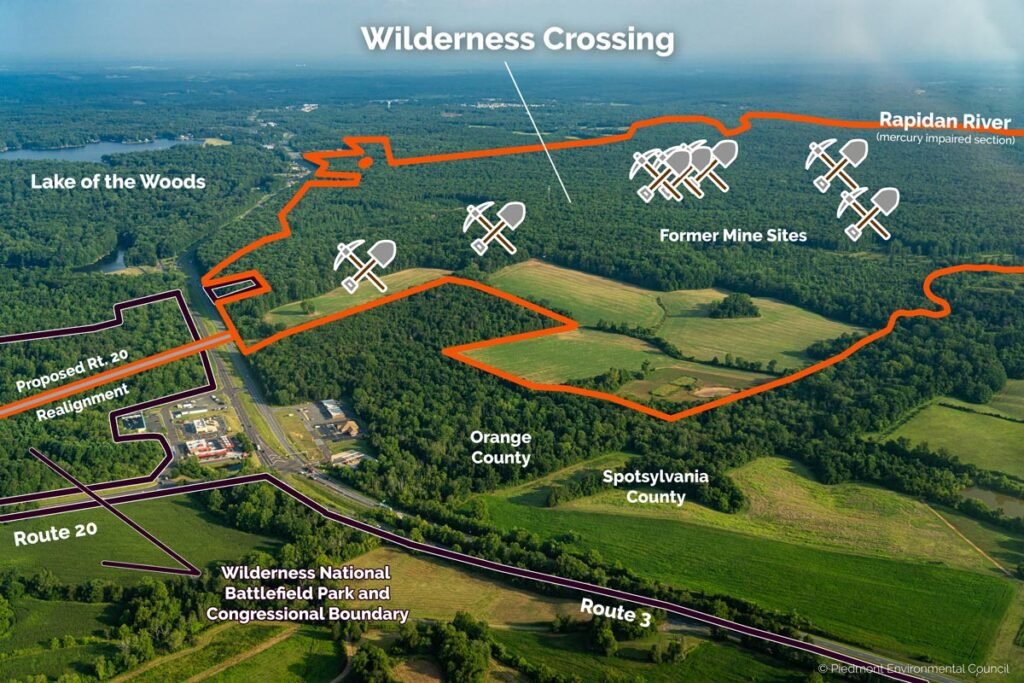
In September, Orange County Circuit Court Judge David B. Franzen released a 17-page opinion letter regarding attempts to quash a 2023 lawsuit challenging the rezoning associated with the Wilderness Crossing project, a more than 2,600 proposed development adjacent to the Wilderness Battlefield. The project has been a bone of contention since Orange County supervisors approved the rezoning in April 2023, changing the land from being zoned primarily agricultural and industrial to mixed-use allowing for development by KEG Associates III. The project plans consist of a variety of uses with up to 5,000 residential units and 732 acres of industrial use, along with commercial use and possibly data centers. A lawsuit filed by the Piedmont Environmental Council (PEC) discovered that 10 local officials had signed nondisclosure agreements for “the benefit of Amazon.com, Inc. and its affiliates.” PEC voiced concerns about the project, noting it would irrevocably change the landscape, as well as cause a potential health risk due to several contaminated abandoned gold mines in the area. Supervisors, meanwhile, state the rezoning is inline with the county’s comprehensive plan and Germanna Wilderness Area Plan which calls for development along the Rt. 3 corridor.
In May 2023, the American Battlefield Trust (ABT), Friends of Wilderness Battlefield, Inc. and Central Virginia Battlefields Trust, Inc., along with residents Mark and Cheryl Nowacki and Robert J. Foster filed suit against Orange County and the board of supervisors challenging the rezoning. The suit consists of seven counts and alleges issues with the development’s close proximity to historic battlefield land as well as impacts on infrastructure, including water, and the process used to approve the plan. The suit alleges that last minute changes were made to the application, increasing cash proffers from $6 million to as much as $24 million, increasing the square footage of industrial data center and warehouse/distribution building space from 5 million to more than 30 million and eliminating some project amenities. These changes, according to the suit, happened on the same night as the public hearing on the rezoning. The plaintiffs also argue the developer was given nonuniform taxation by allowing for the deferral of the rollback tax penalty associated with removing the property from the land use program until a final site plan or subdivision is approved. Typically rollback taxes are implemented upon the approval of a rezoning.
In response to the suit, the county filed a demurrer seeking to dismiss it. It was that demurrer that led to the hearing in March and subsequent opinion letter released in September. In the letter, Franzen agrees with some portions of the demurrer, dismissing three of the counts in the lawsuit, but allowing four of the seven to move forward. The remaining counts allege violations of Virginia law governing rezoning processes, public hearings and taxation. It was thought that the next step would be for the remaining counts to proceed to trial, but no date has been set. In early January, Orange County Attorneys Amy Wilson and Robinson Hubbard, along with KEG Associates III attorneys, filed an appeal with the Court of Appeals of Virginia. Cases generally take at least a year to move through the appellate process.
Friday’s hearing will focus on that appeal. On Monday, representatives for the American Battlefield Trust, Central Virginia Battlefield Trust (CVBT), Friends of the Wilderness Battlefield and the PEC held a joint Zoom meeting to discuss the upcoming hearing. Attorney Michael Brady, who represents the American Battlefield Trust in the lawsuit, said the question is if the case will stay in front of the circuit court or move to the court of appeals. He said the Trust’s position is that the case belongs in the circuit court and should move forward toward a judgement and then the appeals process if necessary.
American Battlefield Trust President David Duncan said the project represents the largest rezoning in Orange County history and was approved despite strong opposition. He said ultimately, the case is about more than just the Wilderness Crossing project. He said its about protecting historic landscapes, ensuring lawful decision making and setting a responsible path for development in Virginia.
CVBT President Tom Van Winkle said historical sites are fixed, development is not and can be adjusted.
“You can’t move where a battle happened,” Duncan added, “You can have the development necessary for a modern society, but protect irreplaceable historic resources.”
The latest hearing in the Wilderness Crossing lawsuit is set for Friday, March 27 at 1:30 p.m. in Orange County Circuit Court.

